Showing posts with label BBC. Show all posts

Have You Unlocked Sherlock?


     As I’m sure many writers started out, I spent a major portion of my childhood carrying around chapter-books wherever I went. Sometimes they were the usual moody preteen paperback fantasies, but after some time I felt as if I had come to the end of all interesting literature (which is of course absurd, but that’s the delusion of adolescence for you).

     Just as I was finishing up primary school (and often reading during the lessons, which I was still acing, I might add), my mother handed me a thick old tome with the silhouette of a slender bust on the front: it was the portrait of some man with a long nose, a proud chin, and a stout little pipe. I had at last come to that great classic, with which many are familiar but few actually read.


     Frankly, one would have to live under a rock not to have noticed the recent flux in the popularity of Mr. Holmes in the last decade: the genius detective has not been protected by copyright for some time, due to the expiration of author’s rights after a certain number of years. But lately, television and motion picture companies alike have been competing to produce the best homage to Arthur Canon Doyle’s beloved antihero.


     Most Americans are likely familiar with the somewhat comical Robert Downey Jr. films by Warner Bros. (also the creators of the Looney Toons… how fitting). They definitely read into Holmes’ genius and his substance addictions, which were certainly present in the novels (though in a more subtle way). However, the films relied more on spectacle and comedy than on actually allowing the audience to solve the cases themselves. Not that anybody would have been able to, of course, but if Holmes himself had been a viewer, he would have been just as stumped as the rest of us due to much undisclosed information in the storylines such as smells or tastes. Not to mention Downey’s distinct lack of resemblance to Holmes as he has been known to appear.
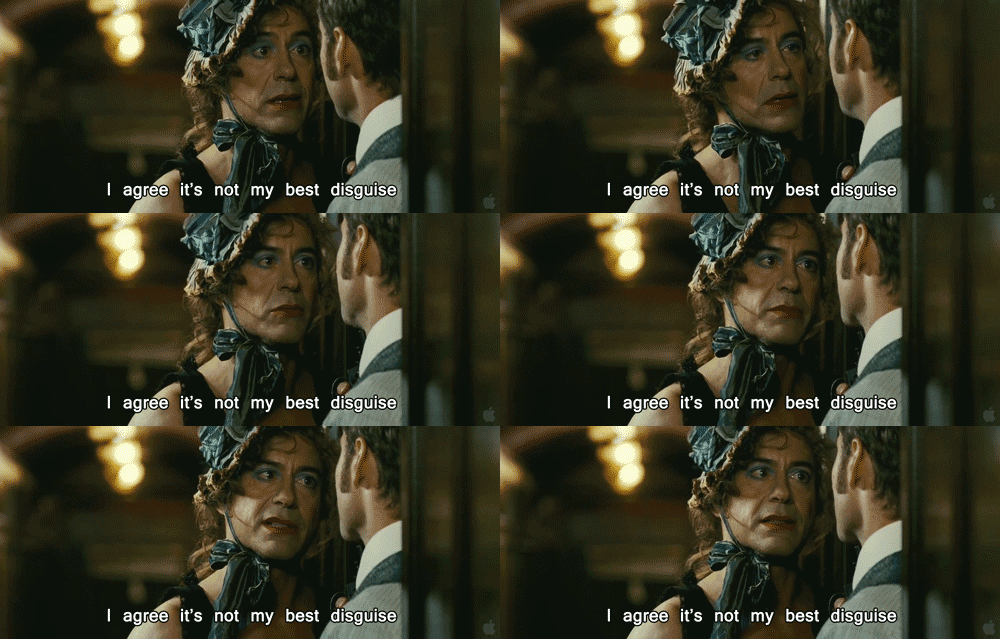

     But I digress. At the moment, there are two major television shows that are attempting to unlock the genius of Holmes using a modern lens. While the hit series House based much of its main character on the Sherlock of legend, the two shows that I’m referring to have actually adapted the character in the flesh, by name: the American series Elementary, which has added the new dynamic of a female Dr. Watson… and the much-acclaimed BBC saga entitled simply, Sherlock. I will be talking about the latter, for those of you who have seen (and probably have come to fear) plenty of its fans.


     And don’t worry; the entire description will, of course, be spoiler-free.

Hogwarts Sherlock, A History

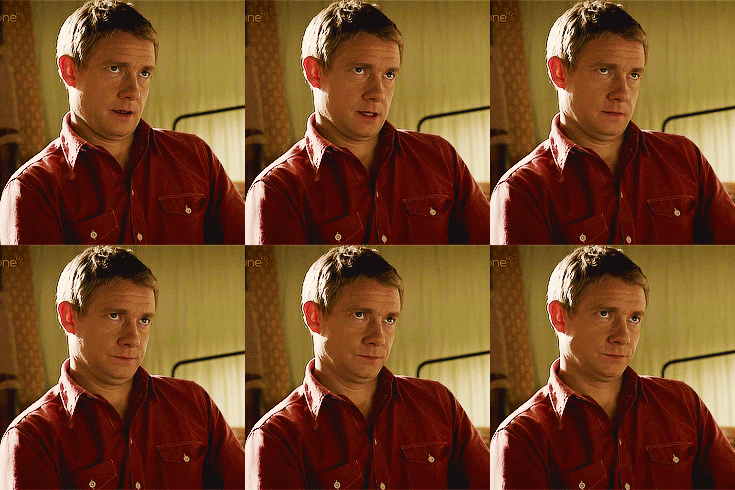
     In 2010, the BBC took a pair of relatively unknown actors named Martin Freeman of Hitchhiker’s Guide to the Galaxy...

     ...and Benedict Cumberbatch of Amazing Grace...
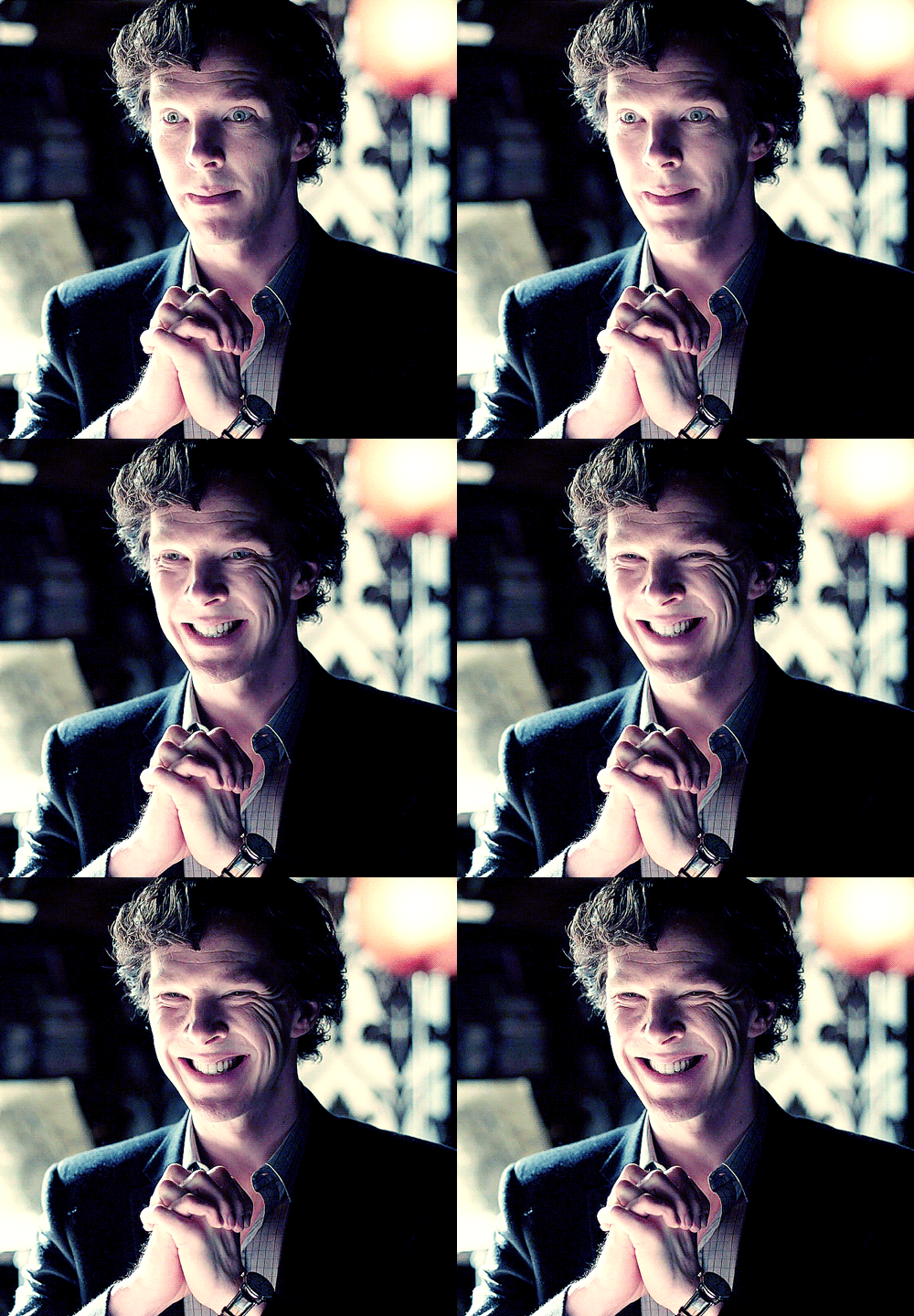

     ...and stuck them together in a fun little series that really defied the normal mold of most television shows. For one thing, most dramas air ten to fifteen hour-long episodes per season. With Sherlock, each episode ended up nearly two hours in length, and each season was only made up of three episodes. In a sense, Sherlock wasn’t so much a series as it was a set of straight-to-television movies.

     But the format wasn’t the only thing that worked in Sherlock: the actors fell into place with perfect chemistry, and their acting careers certainly took off from there (and they even worked together again in New Line Cinema’s The Hobbit trilogy, which almost any fan of the BBC could tell you in their sleep... so if it's new information to you, don't let on to your friends).


     But what’s a show without a script? And what’s a script without a good writer? Well, the BBC broke out their golden boys for that: Steven Moffat and Mark Gatiss. Having enjoyed the benefits of placing the show Doctor Who under these men (with record-shattering results), the BBC was able to take a very trusting hands-off approach with Sherlock after Moffat and Gatiss took the reigns. Both writers, known for their convoluted genius and unparalleled humor, took the mysteries written by Arthur Canon Doyle and gave each a new, modern twist.

     For some time after 2012, a third season was rumoured but unconfirmed — Freeman, Cumberbatch, Moffat, and Gatiss all had separate blossoming careers, and it was suggested that the show might never be renewed…
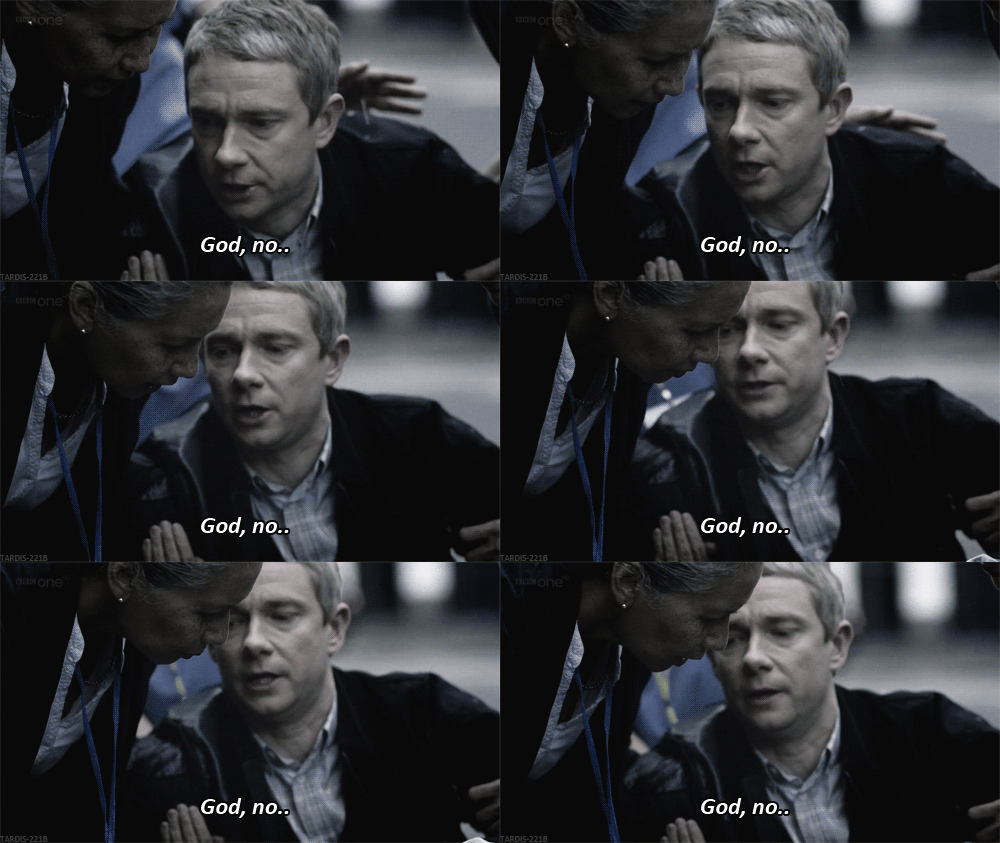

     ...but after much agonized waiting by a growing fan base, Season 3 came to fruition and blew away the television world (and much of the internet) in 2014 with hardly any effort at all. And now, with a special in the works for Christmas 2015 and a fourth season confirmed for 2016, it would seem that the ratings (and furious internet rantings) tell the rest of the story.

The Plot

     As in the original mysteries, a rather ordinary military doctor John Watson returns to Jolly Old England and finds himself a fellow bachelor to split the rent with: a rather odd, eccentric, yet strangely genius man by the name of Sherlock Holmes who works as a detective. Soon Doctor Watson finds himself alongside Holmes on all sorts of escapades, investigating unexplainable crimes that lead them into situations that range from comical to perilous; meeting many characters of questionable or undeniably psychopathic countenances; and, of course, solving crime waves and saving the British Empire.


The Appeal

     As mentioned briefly above, a large portion of this show’s appeal lies in the intricate genius of its writers and the chemistry of its lead actors.


     There’s great comedy in watching the eccentric Holmes make unorthodox demands of Dr. Watson (rather like watching the neurotic Sheldon Cooper quarrel with Leonard Hofstadter over "proper behavior" in The Big Bang Theory).


     And I can’t help but feel a sense of awe at the incredibly detailed masterpiece plots that Moffat and Gatiss have produced. Even if the cases are based on already-existent literature, transferring the crimes into modern settings requires so much focus that it’s uncanny. Every time I watch an episode of Sherlock, I (as a writer) feel intimidated, as if I’m in the presence of the next great classic novel (albeit in cinematic form).


     But I think that perhaps one of the most central factors contributing to the show’s popularity often goes overlooked. Simply this: the audience is provided with all of the information necessary to solve the cases themselves. When Holmes touches a surface, we’re told whether it’s wet or dry. When he looks a suspect over, we see the dog hair and imported watch and tailor-made suit that he sees. We may not be smart enough to solve the mysteries presented on Sherlock, but if Holmes were in the flesh to watch the saga for himself, he would have all the clues necessary to reach every conclusion.

     And it's because of this feature that the fans often go into hyper-detective mode, trying to search for clues to solve unanswered questions between seasons. I've seen many incredible fan-theories, one of which [involving a seemingly-insignificant little squash ball] even turned out to be correct in the long run.
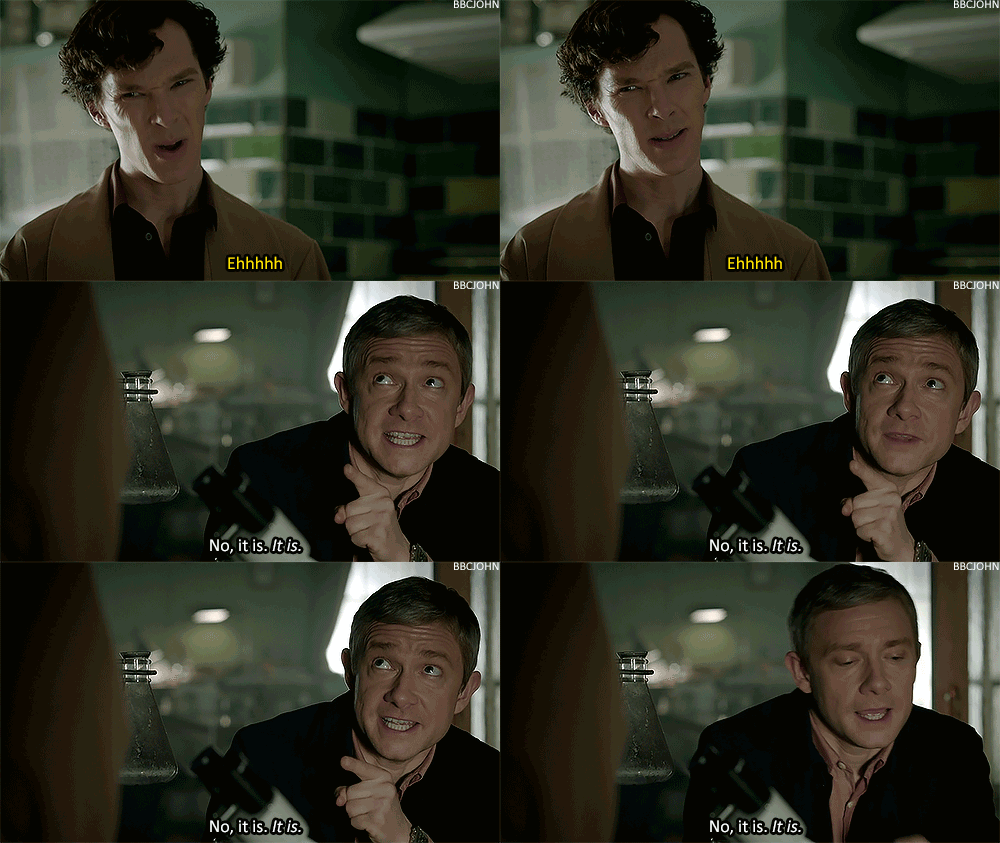

     And as an added bonus to the fun of the show, writers Moffat and Gatiss like to poke fun at their fans.


     The third season especially was laden with multiple tributes to the madness that tends to come with formulating theories about Sherlock...

THERE MUST BE A CONNECTION SOMEWHERE!!

The Rating

     This show is a solid PG-13, but some of the psychological battles (and a few more sexualized episodes) might not be suited for anyone under sixteen.

     Violence: This is a show about modern crimes and masochistic psychopaths. While we may not encounter something as gruesome as, say, Hannibal Lector or Jack the Ripper… there is no shortage of blood, hostages, and cringe-worthy deaths.


     Sex: While, to the modern reader, the unencumbered Irene Adler of the original books was simply a forward thinker… this show’s version of the scandalous lady is certainly not for children or the faint of heart. Nudity, innuendos, and some very revealing clothing abound, as the lady in question has a nearly-illegal career.


     Language: Some Americans may not catch all of the bile in the British slang, but there are enough serious adult words scattered throughout that it’s still best to reserve the show for a mature audience.

The Genre

     This is a modern drama that pays homage to classic murder mysteries and thriller novels: there are dark moments where the souls of men are laid bare, and there are equally many scenes that will have audiences in stitches thanks to the blunt British humour of having an irritating genius for a roommate.
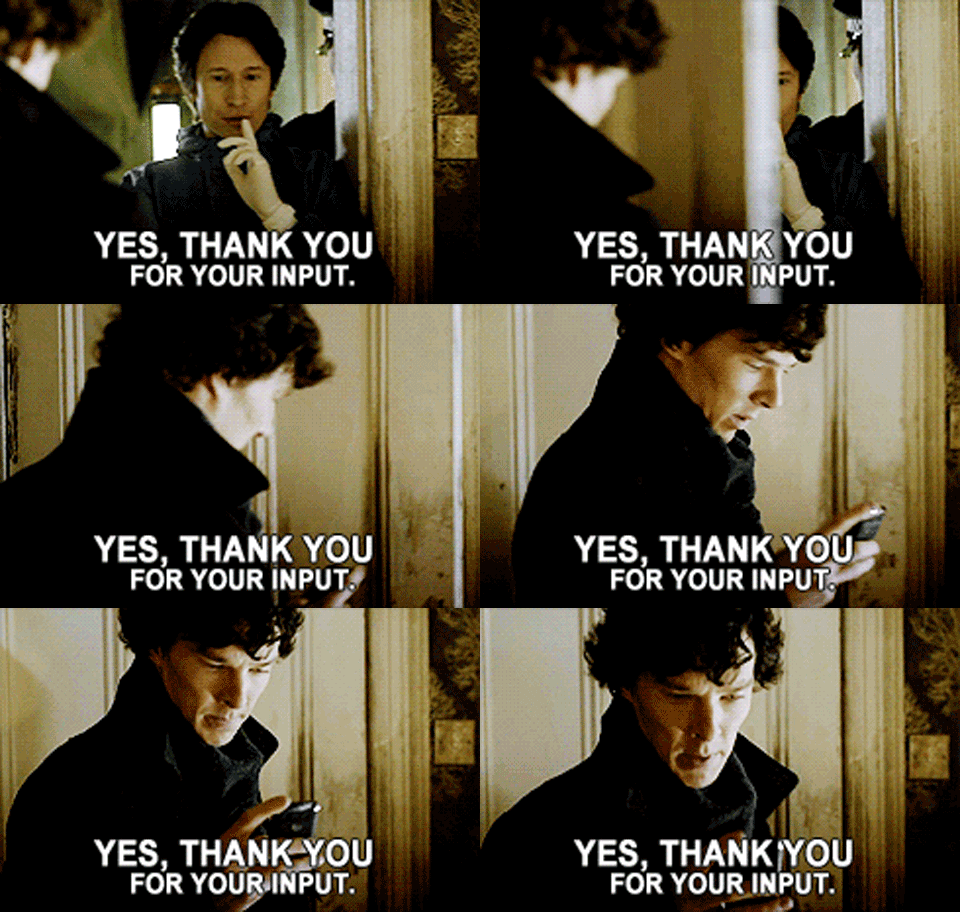

     Right and wrong are often discussed, but they seem to be more and more opaque as time goes on. Many protagonists are brought into situations where the only right solution to their problem is still a questionable action. This certainly isn’t the show meant to answer anyone’s moral dilemmas, but it will certainly get its audience thinking (and perhaps checking out a few extra books on religion, philosophy, and crime-solving at the library).

     So is it worth it?

The Decision

     That depends on you. For one thing, this show is the only British rendition of Sherlock Holmes to be made since the turn of the century… and as the original novels are of British make, it’s generally a more respectable choice than Elementary or the Warner Bros. movies. However, the show certainly tap-dances on some dark criminal themes that aren’t meant for young viewers.
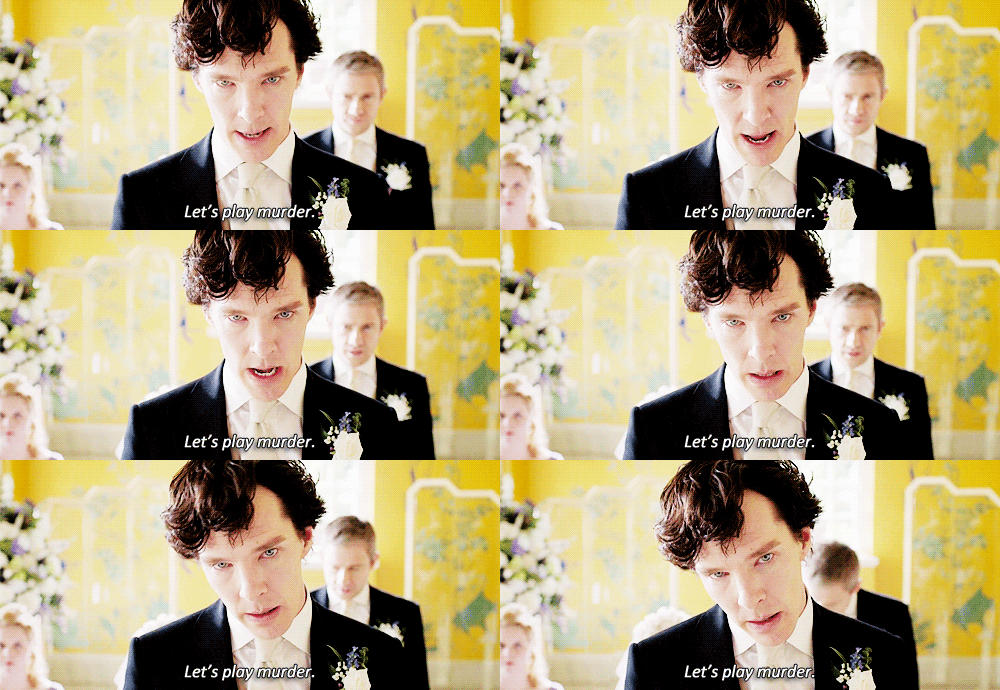

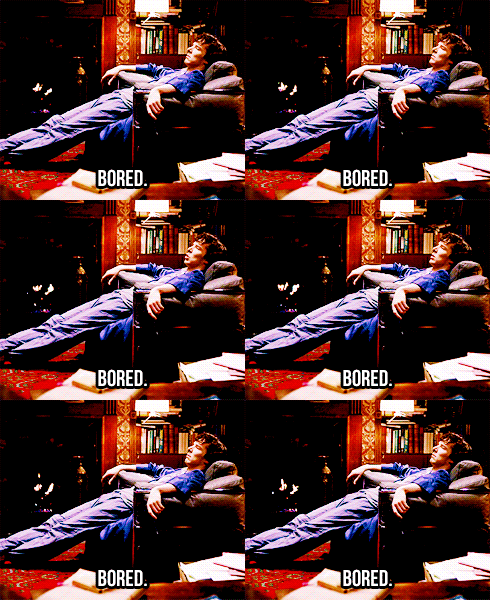
     But I can assure you of one thing, above all else, if you choose to watch Sherlock: You. Will. Not. Be. Bored.


    And if you’re worried about getting caught up, don’t fret too awfully about it. You do have to start at the beginning to understand the deep network of plot twists and criminal webs, but remember: one of the show’s advantages is its unorthodox format. It’s less like three seasons of a TV show and more like nine separate feature films. Even if you simply watch one episode every weekend to unwind, you’ll still be finished in three months (long before the Christmas special arrives). It would be quite similar to watching through all eight of the Harry Potter films.

     And if you’re still on the fence, just give it time. There are plenty of fan-made trailers on Youtube that might interest you if you’re more of a visual person (like myself). Though personally, this official trailer for the first season is my favorite.

Conclusion


     In the end, I’d recommend that you not only sit down to this whirlwind of a show — I’d recommend that you have some friends join you for the viewing. This series is a perfect popcorn-stuffer and will thrill your social group just as much as any movie might. It’ll leave you laughing, gasping, and often in speechless awe… because, like its protagonist, Sherlock is nothing but unparalleled genius.


So You're New to Doctor Who


     I’m sure however you’ve been lured (or dragged screaming) into this fandom, there’s an interesting story behind it. Perhaps you saw an episode completely out of context, and weren’t quite sure what to make of the corky British show you encountered. Or perhaps you’ve been worn down by years of nagging and finally want to sit down and get a few episodes over with, if only to shut up the Whovians in your life. Or perhaps you’re blissfully unaware of all this poppycock, and you just want an explanation for the abundance of internet memes featuring a blue phone booth that you keep running into.


     Well, look no further. This article is a thorough, spoiler-free summary of exactly what the BBC’s Doctor Who is, and why so many people are attached to it.


Hogwarts Doctor Who, A History
     The show first aired in 1963 and ran until 1989. After a brief hiatus and a (somewhat sub-par) movie in 1996, the show rebooted in 2005 and has been on a roll ever since: both ‘first’ episodes were called Episode 1 of Season 1, so for the sake of clarification, the old show (1963-1989) is often called “Classic Doctor Who”.


The Plot
     The show follows the adventures of a time-traveler called simply “The Doctor,” as he explores foreign planets or ancient civilizations… usually while accompanied by various human beings or aliens that end up tagging along with him. And pretty much none of them (or us) know his real name. Hence the show’s title.


     The Doctor travels in his time machine, the T.A.R.D.I.S. (which stands for “Time and Relative Dimension In Space,” because it travels through time and space, and also manipulates dimensions in order to make its inside bigger than the outside). The Tardis always appears to be a regular blue police phone box on the exterior, but the interior houses a virtual mansion of rooms and equipment.


     However, the Doctor is not actually human, though he does (conveniently) look it; he’s a Time Lord, belonging to a humanoid alien race that have two hearts, a lifespan of centuries, and twelve extra lives (I’ll get into that in a second). The Time Lords invented Time Travel and regard it with careful reverence… but the Doctor pinched one of their Tardis-es (Tardis-i?) and is now running about willy-nilly to explore the universe. He usually spends his days either getting into trouble or fighting evil, which tends to come in the form of corrupt Time Lord enemies or aliens and robots that want to exterminate all life in the universe. He and his companions save the galaxies time and time again using their wits and (often) the Doctor’s sonic screwdriver (it’s like a magic wand, but sciency).


The Appeal
     Here’s the genius part. Obviously, the actor who portrayed the Doctor in 1963 is not still playing him — heck, he was old and grey back then, and died in 1975. Thank goodness it didn’t end there.


     The creators of the show had a rather genius idea for dealing with those awkward actor switches that audiences despise: they made it a part of the plot. Whenever the Doctor (or any Time Lord) becomes mortally wounded, they regenerate (provided they’re not dying instantly) and awaken in a new body… usually with a new personality.


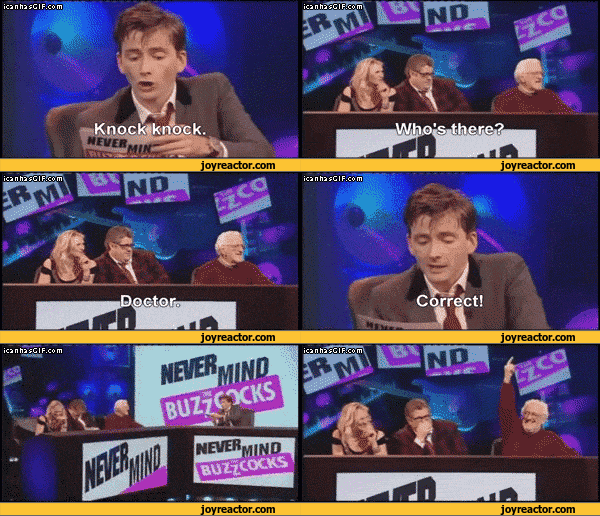
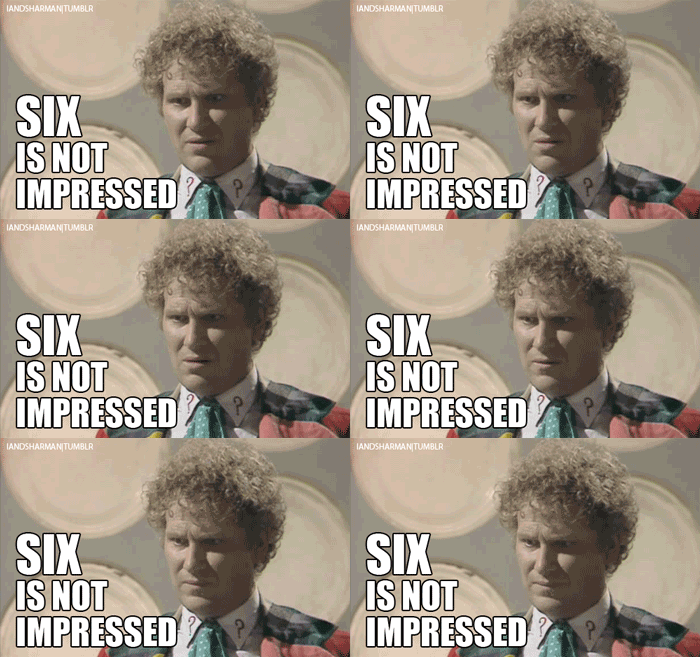
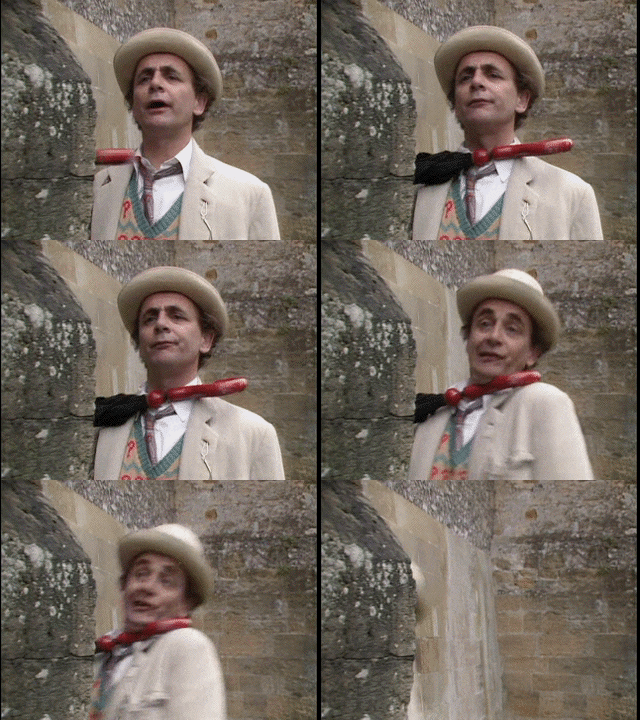
     If you’ve been around the fandom for a bit, you’ve probably heard phrases like “the Ninth Doctor,” or “the War Doctor” and so forth. That’s because multiple actors have portrayed the Doctor: thirteen, to be exact. They’re generally referred to by their actor name or their supposed number in the long trail of Doctors.


     And for those of you who may have noticed, thirteen is the limit of lives that a Time Lord is allowed to live. But don’t worry; the show has already explained away that limit for the Doctor, so the forces that be (*cough*writers*cough*) seem intent on keeping him alive for… basically eternity, is my guess. And that’s quite alright with me, because Doctor Who is the perfect eternal television show.


     The show can continue for centuries without running out of actors, directors, or plots. It can take place anywhere. At any time. With any actor. On any subject. What more could you ask for?

The Rating

     With the exception of a few frightening images or adult themes in rare episodes, honestly the whole thing could probably be considered PG!

     Violence: There are some eery aliens and risky stunts... sometimes damaged bodies, but no blood.

     Sex: There's nothing for the kids to see, thank goodness, but there are occasional innuendos and things like inter-species marriages to look out for.

     Language: Given the British origins of the show, some mild words make an appearance. Americans likely won't mind, and any Brit who's familiar with Ron Weasley's streams of cursing in Harry Potter won't be walking into anything new.


The Genre
     If you couldn’t tell already, the show is more or less science fiction. And I say “more or less” because some episodes vary between comedy and thriller. Some screenwriters think darker than others, but there’s almost always some dry British humour thrown in for kicks.


     I warn, you, however: don’t expect a clean-cut, loophole-free, legitimate-explanation-for-everything sort of plot. This isn’t Star Trek or Firefly or Sherlock (which, I might add, happens to be created by Steven Moffatt, one of Doctor Who’s foremost famous/infamous producers).

     Doctor Who is still based on the cheap science-fiction that started it in the 1960s, which makes for plenty of slimy aliens and knockoff physics and extra-confusing, wibbly-wobbly time-travel.


     There are convenient plot devices galore and you’ll likely walk away with a longer list of questions for every episode you watch… I would recommend that you just try to turn off the “But WHY!?” lever in your brain before sitting down to it. That took me a while to do, but now I absolutely love it.


     When you watch the show, you’re not supposed to care how the characters got into their current predicament: you just care about how they’re going to have to deal with it. And for many of us, our lives are often the same way; we can’t always choose our circumstances and we often have to make blind decisions and hope for the best. Doctor Who captures these moments of moral confusion and shows us that there always is a right decision and a wrong one. There are so many times that our fear leads us to hurt others simply because we don’t understand them.

     So often in the show, a seemingly-evil creature or alien turns out to be quite innocent. Other times, beings once trusted as all-wise end up corrupted by their great power. Not always, but just enough to keep us guessing. And guessing is certainly what the fans do: come up with even more preposterous theories on who's who and what meant what as time goes on. If you've ever been involved with the BBC show Sherlock, you may have an idea of how much thinking (and overthinking) the fans do with every plot twist.


     So is it worth it?


The Decision
     That depends on you. I know several people that don’t really like Doctor Who, and they did watch two or three episodes before making that educated decision. It actually took me a period of several years to ease into it myself (I prefer plausible plots, so swallowing the idea of evil robots and “just because, science,” took me a while).

     If you’re worried about getting caught up (since most television shows tend to have plots that grow ever-more convoluted and complicated with time), I can propose a few shortcuts for you to experience the best of the show by recommending seasons where you can start afresh, as well as a number of stand-alone episodes that you can watch before deciding if the Who is for you. Some episodes may have a few joking nods to old seasons here and there that you might miss, but as long as you’re aware of the show’s reoccurring characters and villains, you’ll have almost no trouble comprehending what you’ve gotten into.

     -The Traditional Beginning
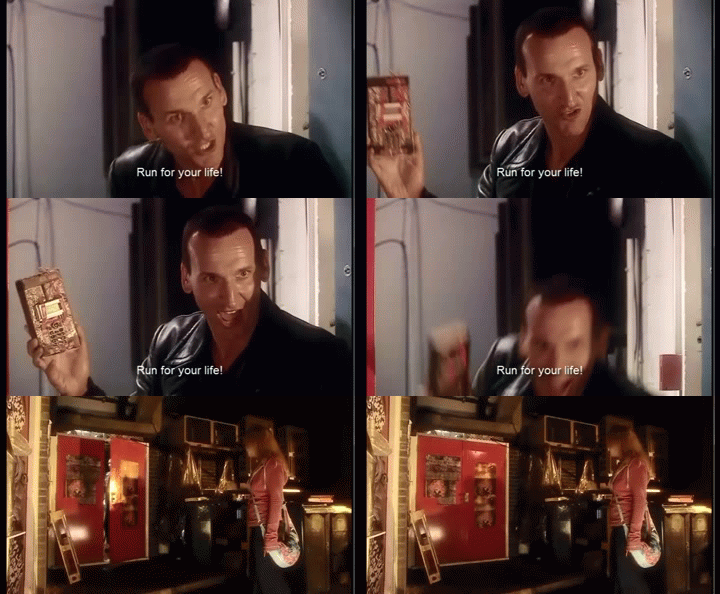
     Season 1, Episode 1: “Rose”
     If you wish to start at the beginning, you’ve actually got two options. If you want to be a real purist, you can go watch “An Unearthly Child,” which was the very first episode that aired in 1963 (which I have yet to find except perhaps on fancy DVD sets). But I’m going to be recommending episodes from the 2005 reboot and onwards here. Either way, both ‘first’ episodes were made to induct viewers into the show, so you can watch them without fear of not understanding anything. However, if you’re a stickler for decent special effects (like myself), this method (and many episodes of Classic Who) may not be for you.


     -The Quickest Catch-Up
     Season 5, Episode 1: “The Eleventh Hour”
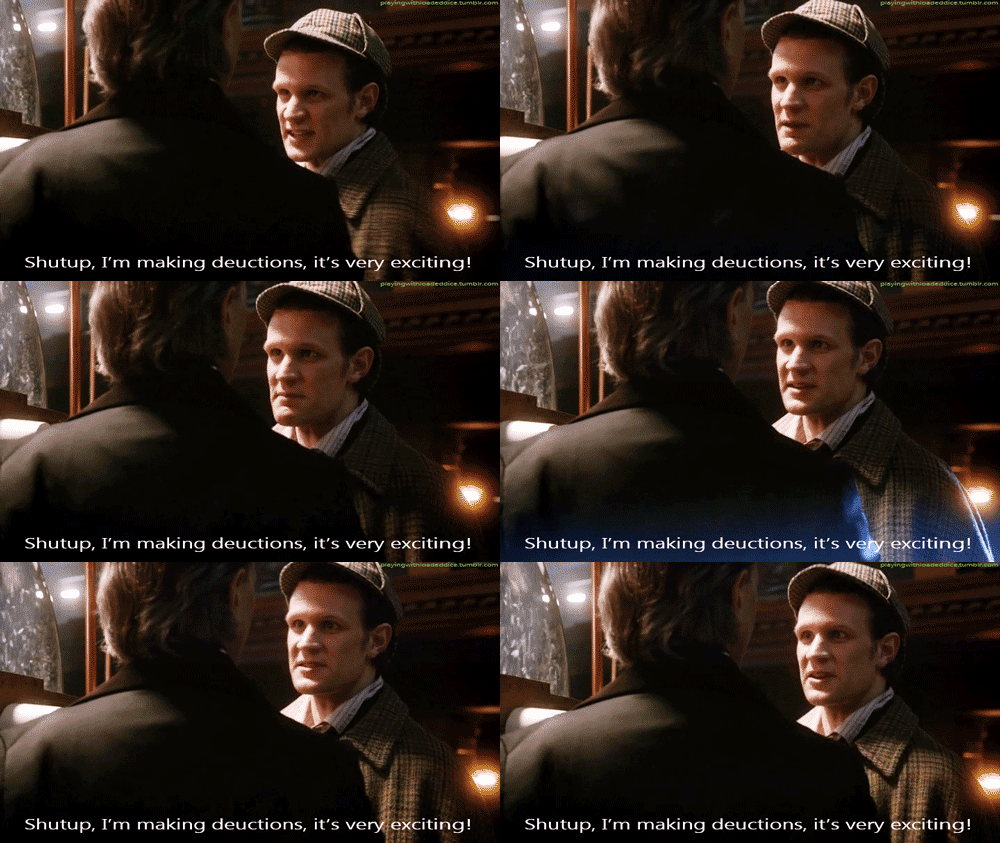
     Though I may get some flak from a few purist Whovians, this episode is generally my go-to when introducing somebody to the show. The special effects are much-improved, and the plot has started afresh with almost no plot connection to its previous seasons (I have a feeling that’s going to happen every two or three Doctors).
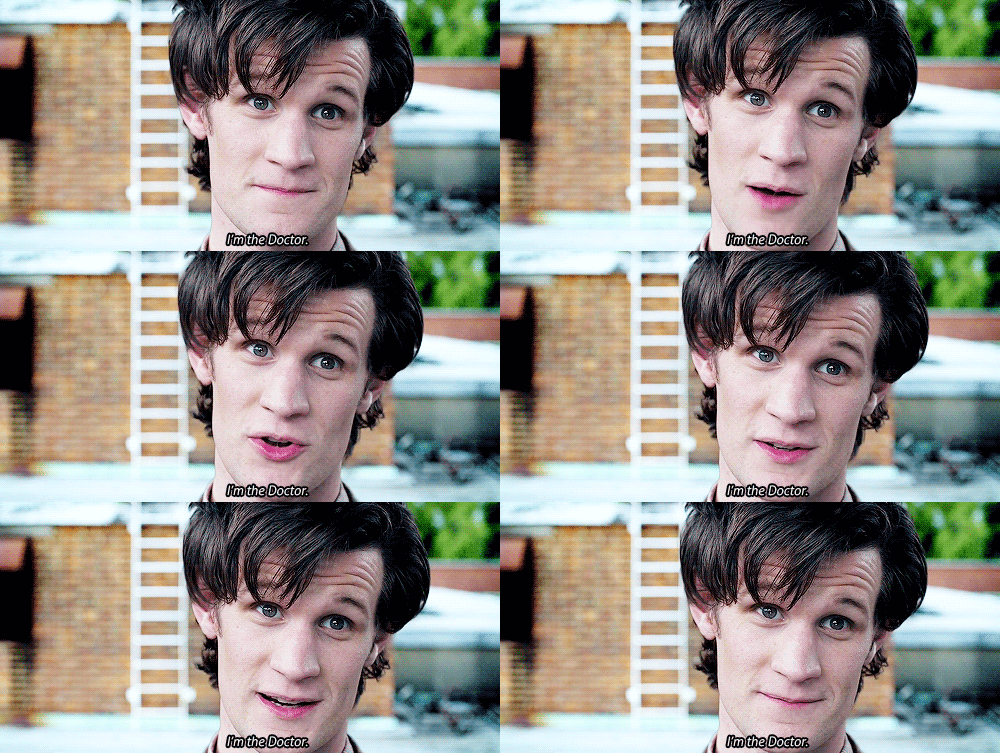
     “The Eleventh Hour,” was Matt Smith’s first episode as the Eleventh Doctor, where he begins by meeting all-new companions with almost no connections to his past adventures. If you decide you like the show after seeing this episode, then you can go back and catch up without worrying about spoilers. Not that you’d miss much if you just started with Smith and watched all the way to the present Doctor, except for perhaps the full story of a lady named River Song (who appeared in one two-hour episode prior to Smith’s arrival).

     -The Best Stand-Alone Episodes
     Good stand-alone episodes, in most cases, require next to no information except the basics already explained in this article. They’re great for giving somebody a taste of the greatest entertainment that Doctor Who has to offer, for those who don’t want to watch through a whole season to decide whether they want to follow the show. The very best episodes (in my opinion) are marked with asterisks.

     Season 3, Episode 1, “Smith and Jones”
     The special effects for the show are starting to improve a bit at this point, though frankly you’re so close to Season 1 I don’t know why you wouldn’t go straight to the beginning of the reboot instead of coming here. Still, it’s a pretty good stand-alone for someone flying in the blind, because its main character feels the same sense of overwhelming confusion that a green audience might. Plus, the writers purposefully made the script to mess with David Tennant’s accent (he’s actually a Scottish actor, but he had to say “Judoon platoon upon the moon” like a Brit: ouch).

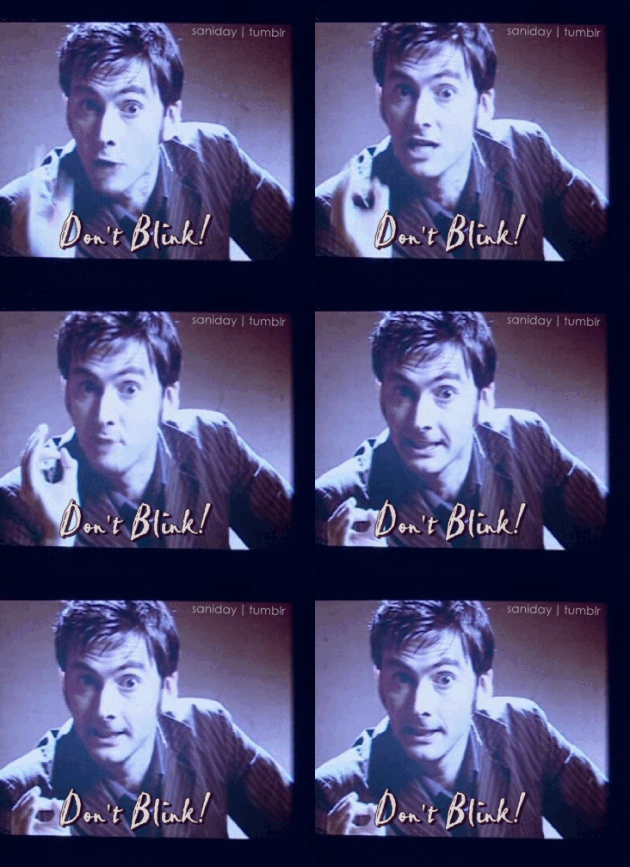
     *Season 3, Episode 10, “Blink”
     While this episode is certainly not for the faint of heart, it’s great for anyone trying to understand the genre of the show…  though it actually doesn't have a whole lot of the Doctor in it,  and he’s usually my favorite part.


     *Season 5, Episode 1: “The Eleventh Hour”
     (see the previous category for explanation)

     Season 5, Episode 2: “The Beast Below”
     Riding on the tailwinds of its predecessor, this episode is another classic that requires little to no knowledge heading in, except perhaps a few tidbits from Episode 1.

     *Season 5, Episode 11: "The Lodger"
     This sweet little stay-at-home, stand-alone episode follows the Doctor while he’s temporarily stuck in one place without his Tardis. No prior knowledge needed.

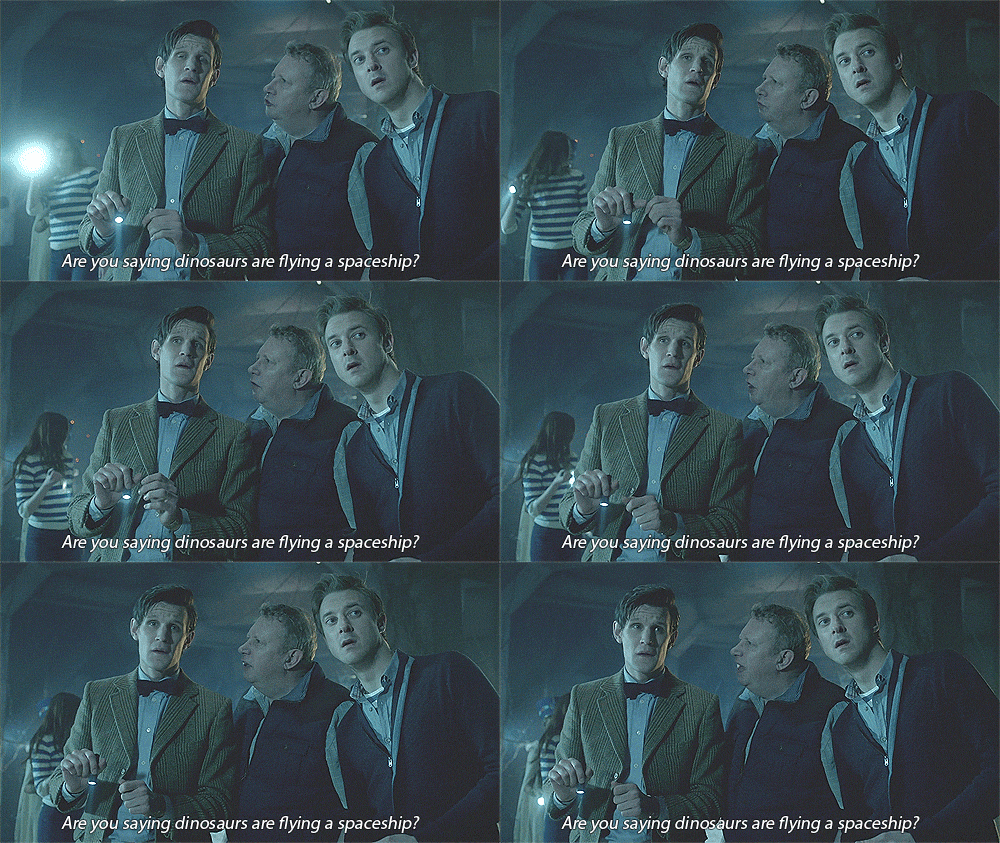
     *Season 7, Episode 2: “Dinosaurs on a Spaceship”
     Just the title will tell you how seriously the show takes itself. This episode may be a bit deep into Smith’s career as the Doctor, but it’s actually a great stand-alone that requires just about no prior knowledge. There’s a reoccurring alien species involved, a reunion of really classic British actors, and one of the Doctor's darkest decisions he's ever made (I got more goosebumps than I did watching "Blink"), but that’s about it.


     Season 7, Episode 0: "The Doctor, the Widow, and the Wardrobe"
     This Christmas special includes a minor spoiler for its previous seasons (namely, the question of whether the Doctor is alive or not… let’s think about that for a second, now that we’re on Season 8…) but it's definitely one of the best single episodes of the show in my opinion. It’s got the great classic plot twists and heartwarming comedy that can only come from a show like Doctor Who.

     Fan-Made Trailers
     And if you’re still on the fence, just give it time. There are plenty of fan-made trailers on Youtube that might interest you if you’re more of a visual person (like myself). For example,  this  trailer is one of the better fan-made explanations for what the show is about - some other videos are better quality, but this is the only one to mention the fact that the Doctor’s appearance changes.

     However, if you’ve read my above summary of the show, then you can look  here  for a more high-quality trailer.

Conclusion
     In the end, though, I’d recommend that you ask the Whovians in your life where they think you should start. Then prepare yourself to laugh…


     …Cry…


     …Cheer…


     …And shake your fist at Steven Moffatt.


     Sort of.


     There's really no good way to judge Doctor Who unless you watch it for yourself. There are some things about it that can’t be explained; only experienced.


~

For those of you with more questions about the show, like why the Tardis looks like a blue phone booth, or how it’s bigger on the inside, just let me know. I didn’t include them in this article for brevity’s sake.

And to you Whovians who are reading, what do you think? Did I miss any vital information, or stand-alone episodes that you think would be perfect for inducting newcomers?