One of the lovely things about the modern world is the recent rebound of what’s commonly called “Nerd” or “Geek” culture, such as in the unparalleled success of the Marvel franchise and the return of series like Star Trek to the silver screen. In recent years, one such saga has been rebooting itself over and over again, with mixed responses from fans and newcomers… but to anyone who grew up with these certain comical green dudes, even the original movies from the eighties are still well-worth a watch.

For those of you who may be a little more hesitant about sitting down to watch anything about some ridiculous radical reptiles, let me assure you that there are plenty of ways to get started; and if you don’t like what you see then don’t worry; there is probably at least one version of this franchise that is for you. Allow me to explain the appeal of the Teenage Mutant Ninja Turtles to you in a spoiler-free nutshell… or rather, half-shell.
Hogwarts The Ninja Turtles, A History
Just as the turtles themselves have a very unlikely and ridiculous origin, so too their actual franchise. Comic book artists Kevin Eastman and Peter Laird were having some pizza and tossing ridiculous ideas back and forth over a night of bad television in 1984. One of them doodled a funny little turtle carrying ninja weapons in a belt... and they decided to run with it.
Eventually they ended up self-publishing a single-issue comic that was meant to parody several other popular comic books of the time (particularly Daredevil, but you can read all about it yourself if you're really interested, so I won't bother with the details here for anyone who wants bare-minimum knowledge). The pages were entirely black and white, the turtles all wore red masks, their personalities were almost indistinct from one another, and the style was very gritty and violent.
However, animation studios and toy companies slowly caught on. The turtles were redesigned, rewritten, and released in an animated miniseries where they were given colored masks...

…separate personalities, and iconic slogans like, “Turtle Power!”

Eventually CBS started airing the show, and the rest is history. Ninja Turtle school supplies, cameras, towels, skateboards, even breakfast cereal were stocking shelves. The show continued for ten seasons until 1996, while the comic books went their own way and kept their gritty separate storylines.
In 1990, Jim Henson (creator of the Muppets) joined an effort to mix the two mediums using a live-action film… however, no studio would take it on. Eventually Teenage Mutant Ninja Turtles was released without studio funding, and it became the most successful independent film at the time (and now sits as the second-highest-grossing independent film ever made). The movie, while filled with violence and language not suitable for the young children who watched its animated counterpart, is still considered the series classic by many fans.
Two sequels followed.
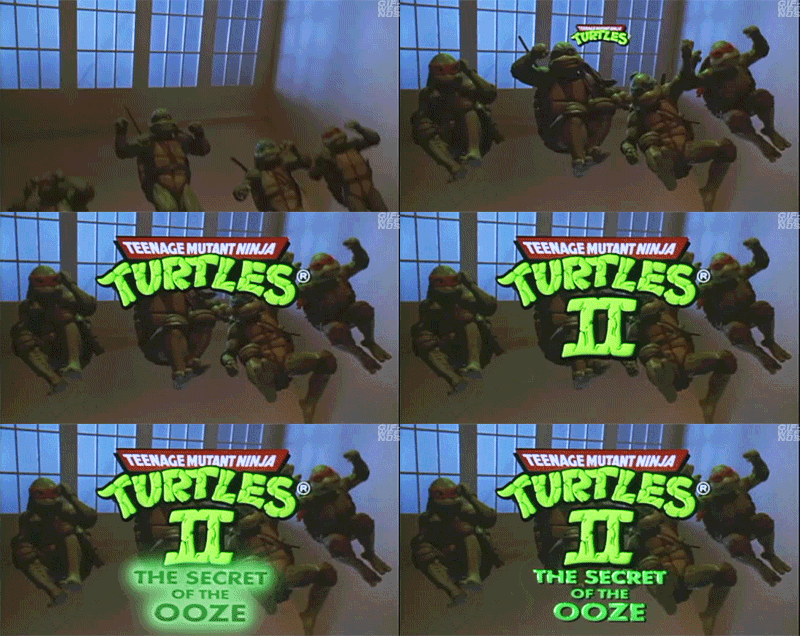
The Secret of the Ooze, and Turtles in Time. Ooze was made in memory of Jim Henson, was much more kid-friendly…

…featured a major cameo by Vanilla Ice (it was the nineties, okay!?)…

…as well as a larger number of plot holes than its predecessor… but it was still a fine piece of cinema when compared to Turtles in Time, which was made without Jim Henson’s workshop and did a poor job of costuming and humor.
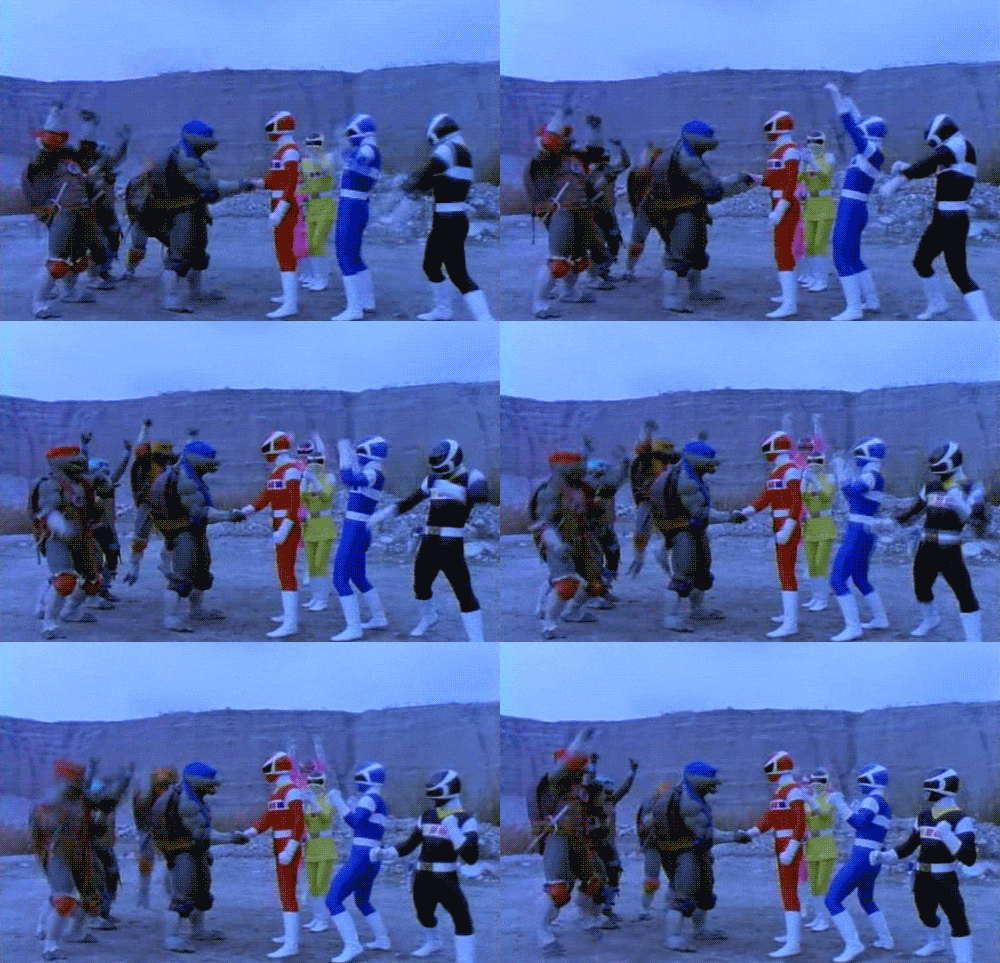
In 1997 when the animated series ended, Saban Entertainment released a live action television show entitled The Next Mutation. It was... different. There were even a few crossovers involved.
It also featured a female turtle named Venus De Milo… but the poor costuming, plots, and negative fan reception of Venus caused the show to cancel after just one season.
It wasn’t until 2003 when Fox started airing a new animated version of the show that the turtles re-spiked in popularity. A computer-animated movie was released in 2007 called TMNT, which broke the mold by not featuring an origin story (so it was a bit tough for newcomers to get integrated). It retained all of the humor and adventure that fans loved… but it went overboard by trying to introduce a new villain and an ancient curse (as if it isn’t hard enough to believe in walking talking mutants, they tried to include magic and monsters… all in less than two hours).
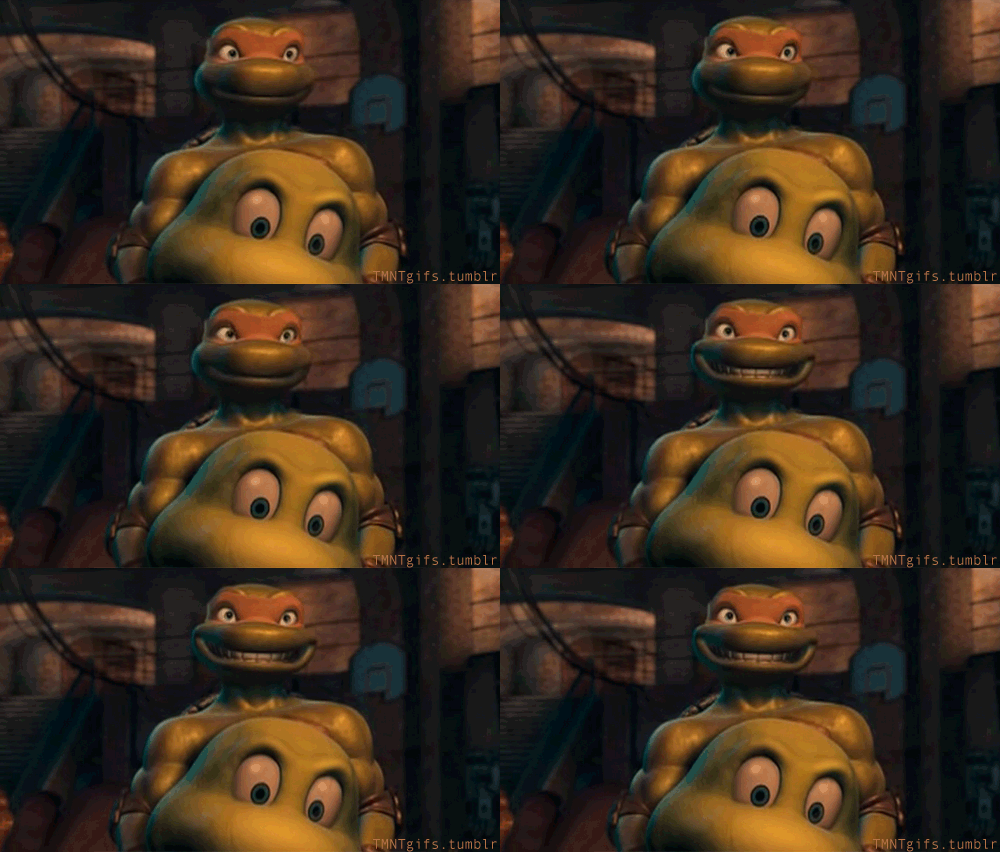
In 2009, an animated video with very little press release was made, called Turtles Forever. It played off the idea that some of the shows involve dimension-jumping and fourth-wall breaks, and showed multiple genres of Turtles interacting with one another (including a set of gritty black-and-white reptiles playing homage to the original comic books).
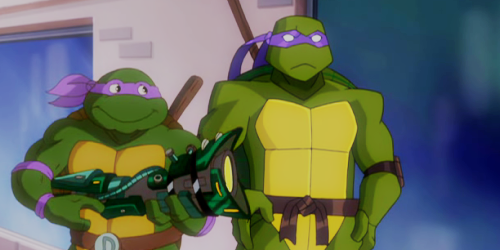
While not publicly declared from the rooftops, Turtles Forever was well-liked by the majority of its fan base.
Also in 2009, Nickelodeon bought all rights to the turtles once Fox’s animated show came to a conclusion. Since then, they’ve had a computer-animated show running since 2012… and of course, Michael Bay tried to create another origin-story live-action film in 2014, and I have yet to meet anyone with a kind word to say about it. Critics, fans, newbies… they all dislike it.
The Plot
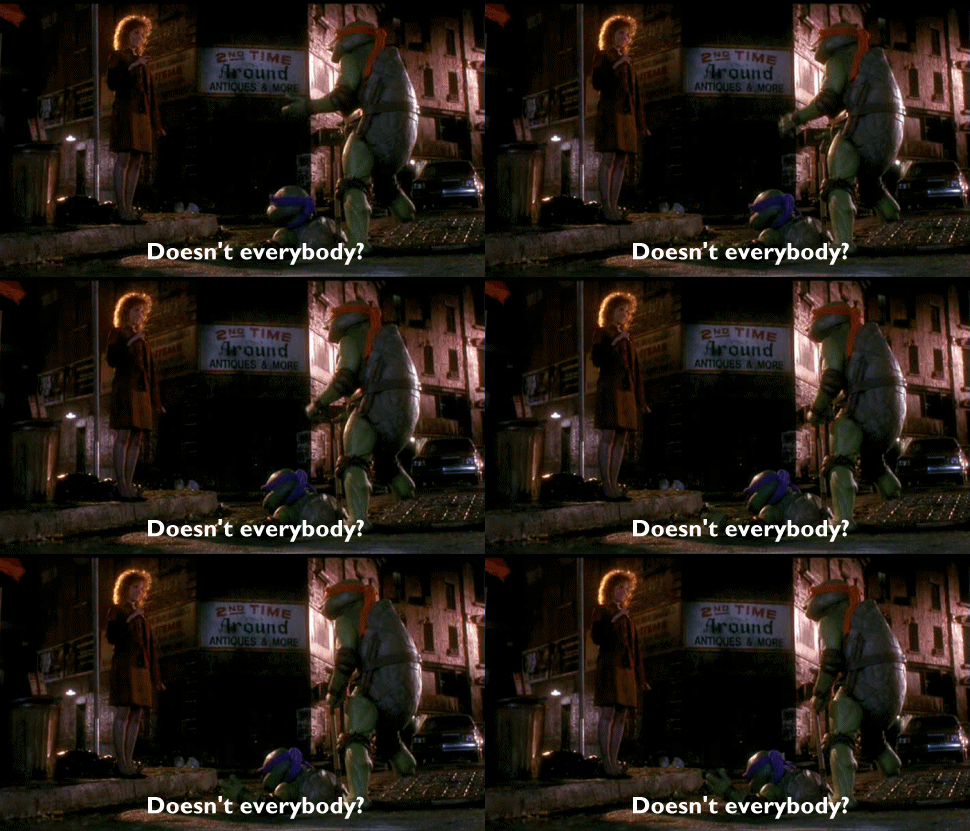
Different shows and movies may differ on the details*, but in general, the story follows New Yorker April O’Neil (usually a TV news reporter)…

…as she is rescued from a mugging by four muscled mutants. They take her down into the city sewers where they’ve been raised for over a decade by their sensei and adopted father, an aged mutant rat named Splinter. Reports vary over whether he was born human or rat, and how he originally learned the art of ninjitsu, but the point is:
Splinter was a normal sewer rat that found four baby turtles in a storm drain, crawling in a strange radioactive canister of ooze that had been accidentally discarded by some polluting company or other (depending on which story you pick). Soon they all started to mutate and learn human speech. Splinter named the turtles with an old book on Renaissance art, and then… oh what the heck, I’ll let the old theme song say it!
“Splinter taught them to be ninja teens:
Leonardo leads, Donatello does machines.
Raphael is cool, but rude
And Michelangelo is a party dude!”

(And for those of you who have a hard time keeping them straight:
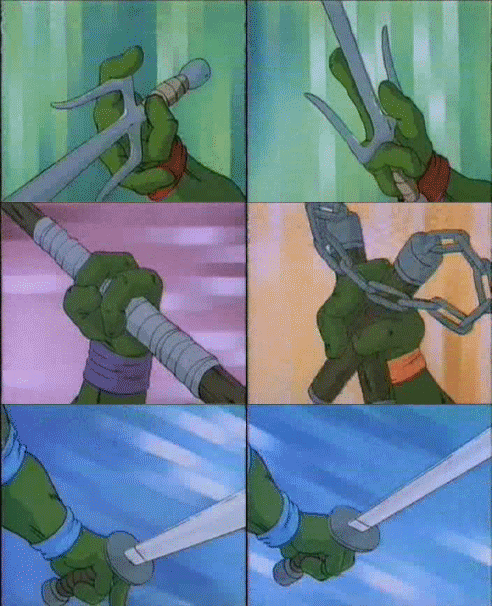
Leonardo: Blue mask, katana blades, leader
Raphael: Red mask, sai, brute force
Donatello: Purple mask, bowstaff, brains
Michelangelo: Orange mask, nunchakus, humor
You're welcome.)
Having lived in the sewers all this time, the four brothers have learned about human culture by absorbing whatever we throw into the storm drains and subways: magazines, old TVs, stereos, and — of course — pizza. Lots and lots of pizza. (There's probably more hot dogs than pizza slices floating around below New York... but let's face it, a lot of us would take a slice of pie over hot dogs any day.)
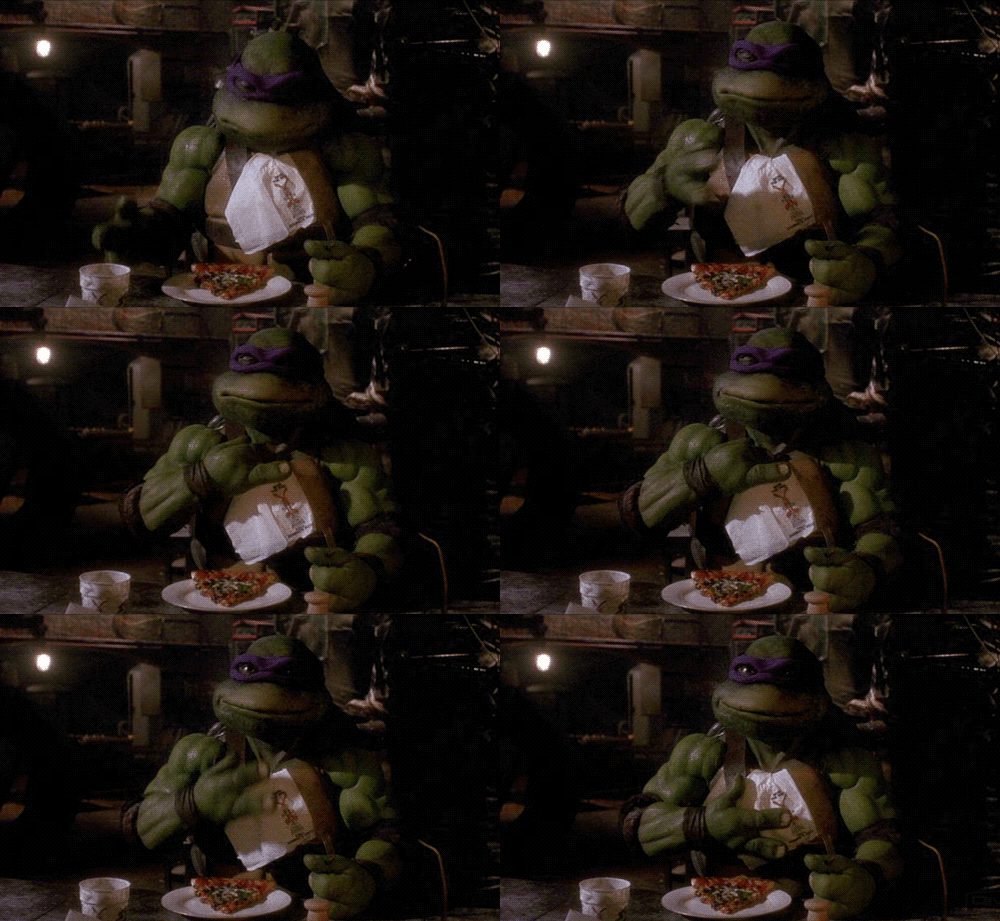
They spend their days like most other teenagers: skateboarding, watching TV, and stuffing their faces with junk food.
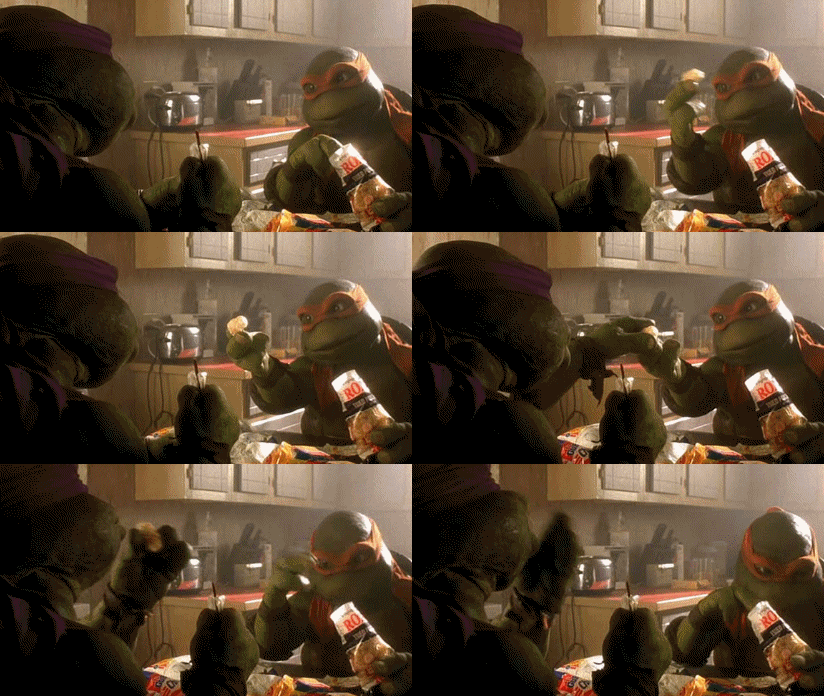
They spend their nights as vigilantes in the crime-ridden city, battling gangs and (in particular) their arch-nemesis the Shredder, a blade-clad ripoff of Darth Vader who heads a crime syndicate called The Foot.

Some sagas set him as an ancient enemy of Splinter (the rat: try to keep up) from back when they both still lived in Japan. The Shredder is accompanied by hundreds of expendable Foot ninja lackeys (usually robots in the kid-friendly sagas), and sometimes (again, in the animated versions) an evil talking brain-creature from another dimension. Because if you're already animating a series about anthropomorphic reptiles… why not?

*The 2014 movie by Michael bay attempted to rewrite almost every major factor of the turtles’ origin story, and its plot is therefore not included in this synopsis. For more ideas about its inaccuracies, you can check out this spoiler-free movie review or the review by classic Youtube channel, CinemaSins (I think it may have broken a record with over 200 problems).
The Appeal
From the outside looking in, Ninja Turtles appears to be a lot of hype over a ridiculous concept. That’s certainly what Michael Bay seemed to think when he made a movie on it, but seeing his film actually helped me (and probably many other fans) realize where the appeal of the show really lies.
Yes, it’s fun to watch mutant ninjas run around New York City while the inhabitants live their daily lives in total ignorance. Yes, it’s fun to watch tentacled dimensional aliens boss around mad scientists and create giant weapons to rule the world. But in all honesty, the real appeal in Ninja Turtles is watching four teenage brothers interact with one another.
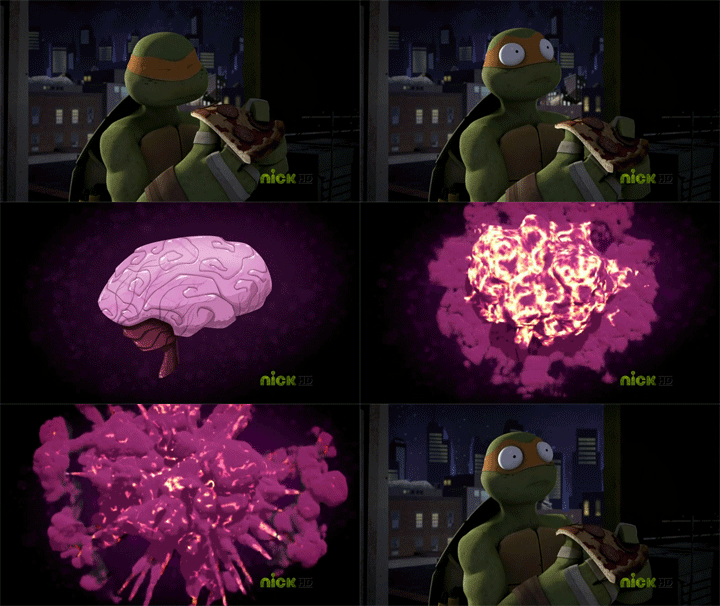
Anyone who’s had a sibling before can testify to the ups and downs of living with someone whose interests differ from yours. Coming from a home that mixed athletes, artists, and honor students on a daily basis, I can fully relate to the comedy and occasional tragedy that the Turtles barrel through as they struggle to be a family. They each express their desires and their feelings in different ways, sometimes pranking one another …
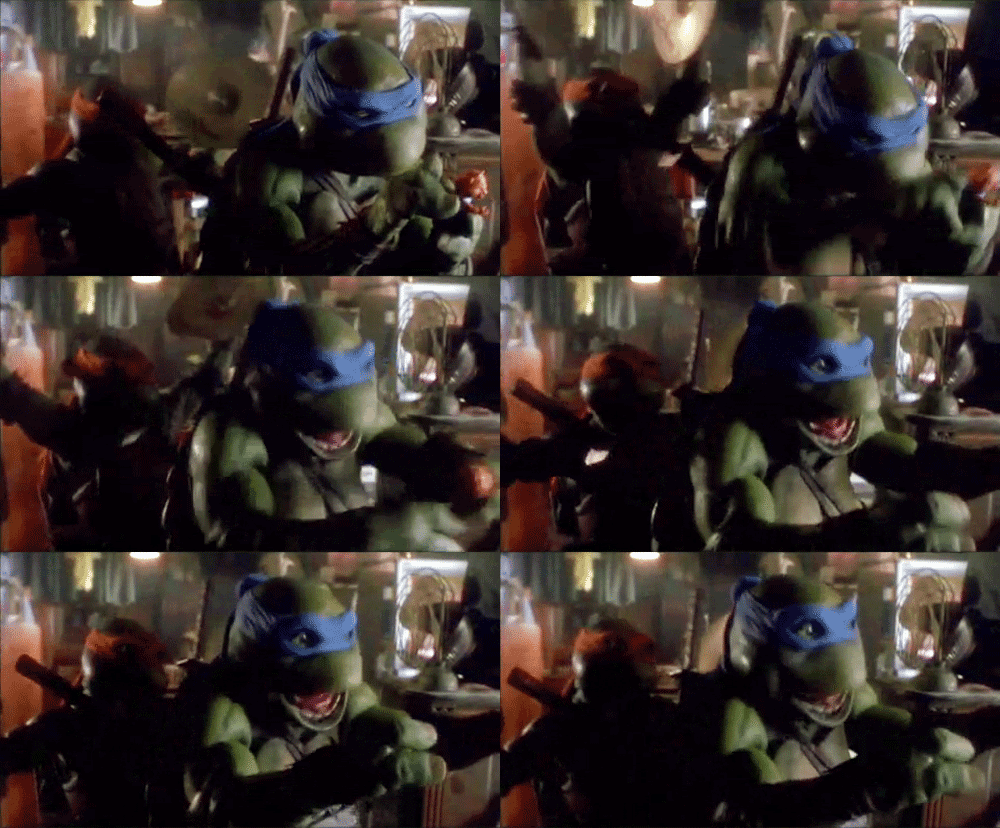
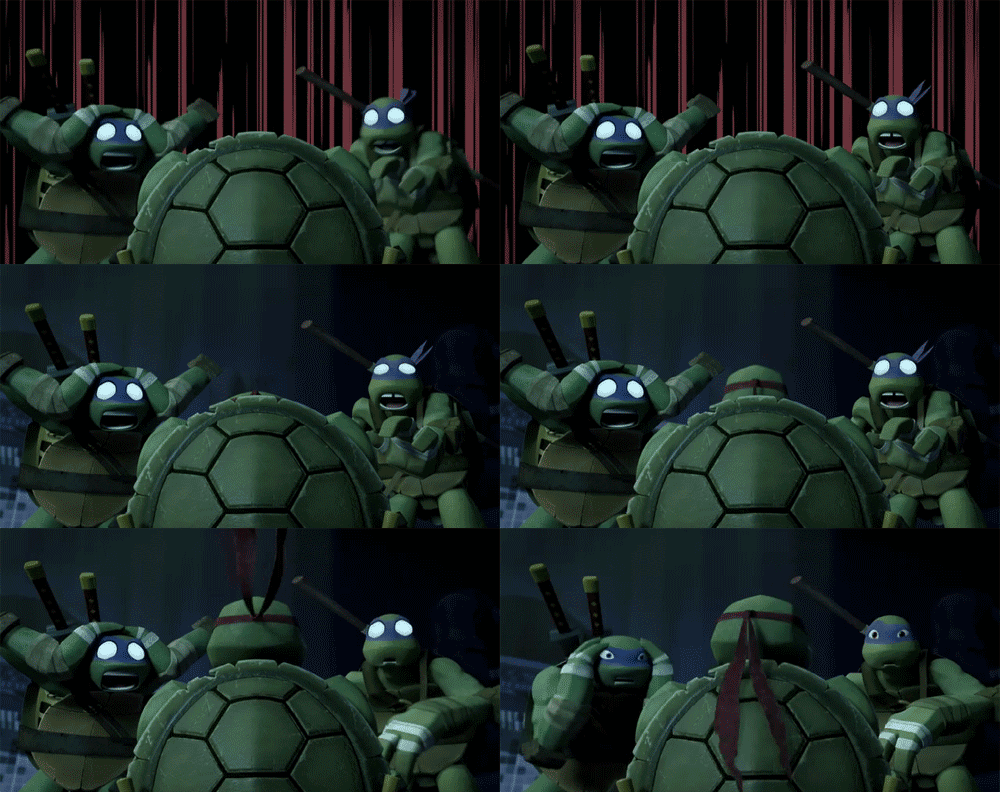
…sometimes getting into shouting matches, and sometimes just rolling their eyes in exasperation.

The most frequent example of this friction occurs when Raphael, just barely the strongest fighter of the four, tends to butt heads with Leonardo over his rights to lead the team. Most of the feature films tend to center around this conflict, often until Raphael finds himself alone and must come to grips with the fact that he needs his brothers.
The Rating
The animated shows are probably PG, and the movies centered on origin stories (namely the very first gritty 1990 film from and the 2014 version by Michael Bay) are PG-13.
Violence: The word ‘ninja’ is in the title: what did you expect?
There’s a lot of martial arts action delivered on expendable lackeys, often with perilous situations and injuries threatening the characters. However, to my knowledge there’s no visible blood from injuries. In fact, some of the series include quite a bit of slapstick.
It should be noted that the original movie features adolescent gangs with underage drinking and drug use — as I said, it was based on some pretty gritty comic books. So be warned.
Sex: Except for the occasional kiss shared between two human characters and mild teen humor, there’s nothing to see.
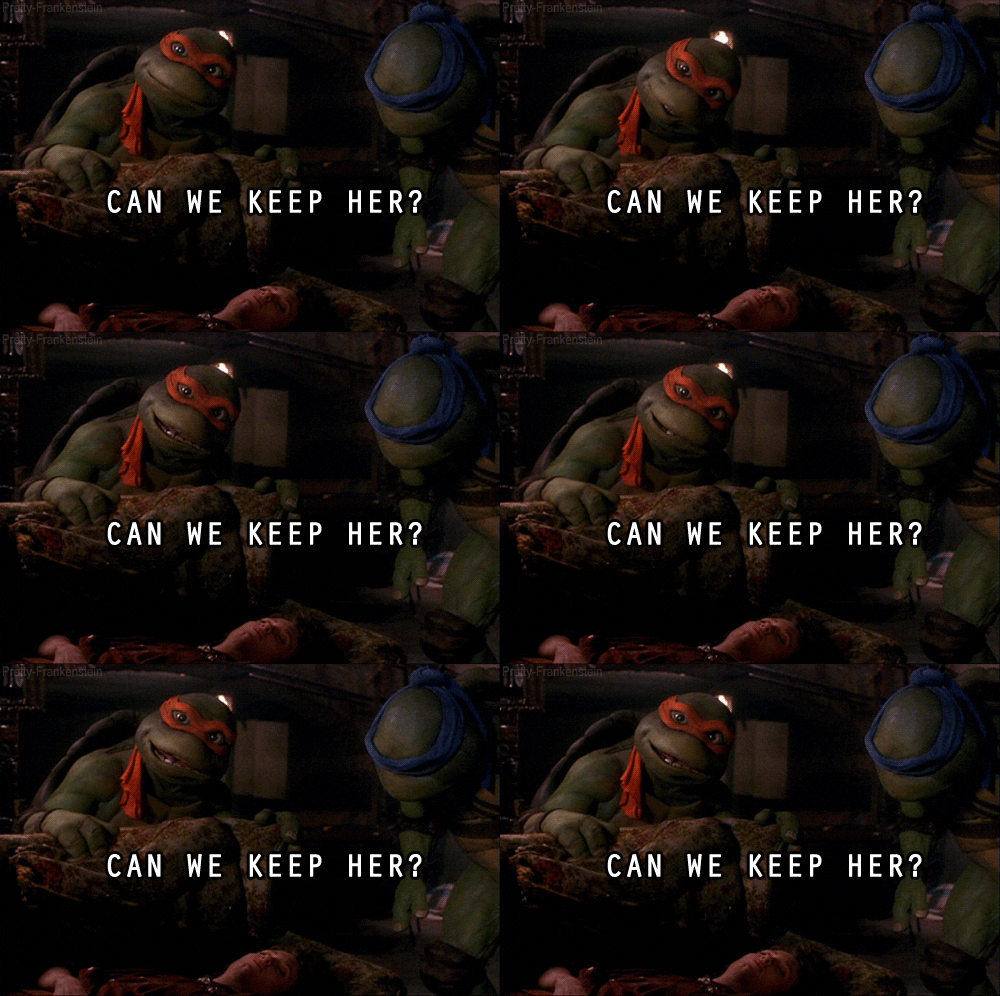
Language: With the exception of the 1990 movie that contains some for-teen-ears-only words, this is a very kid-oriented franchise.
The Genre
Featuring some very eighties-style idealization of martial arts and good vs. evil, this series tends to mix action with comedy and give its audiences some wild fun. Serious matters tend to center around family and Eastern spiritualism, but nobody runs to this show for moral debates. The eighties kids’ show tends to feature ridiculous villains and jokes that break the fourth wall, while the live action movies are a bit more grim and a bit less silly (relatively speaking).
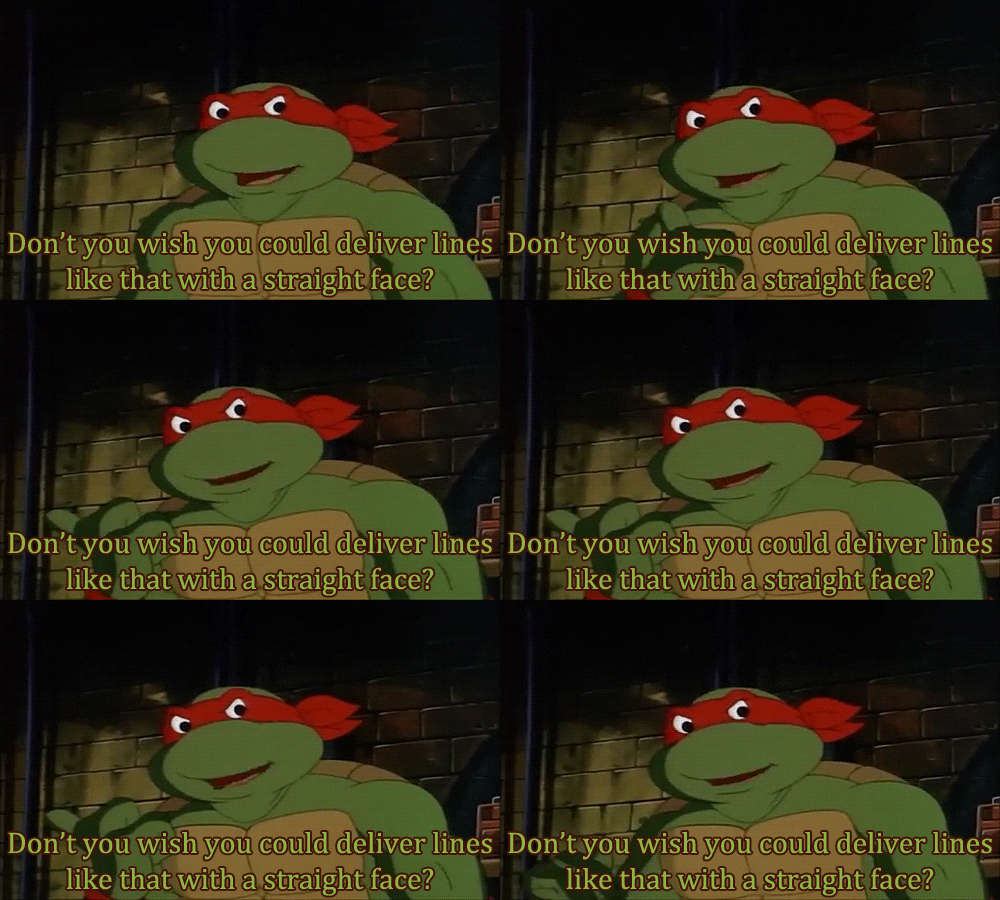
So is it worth it?
The Decision
That depends on you. There are plenty of people out there who don’t like the Ninja Turtles, but you shouldn’t criticize the franchise until you’ve gotten a good taste of at least two separate versions. And that’s where this article comes in!
If you’re worried about getting caught up, there are many places to begin — and many genres if you’re a picky viewer.
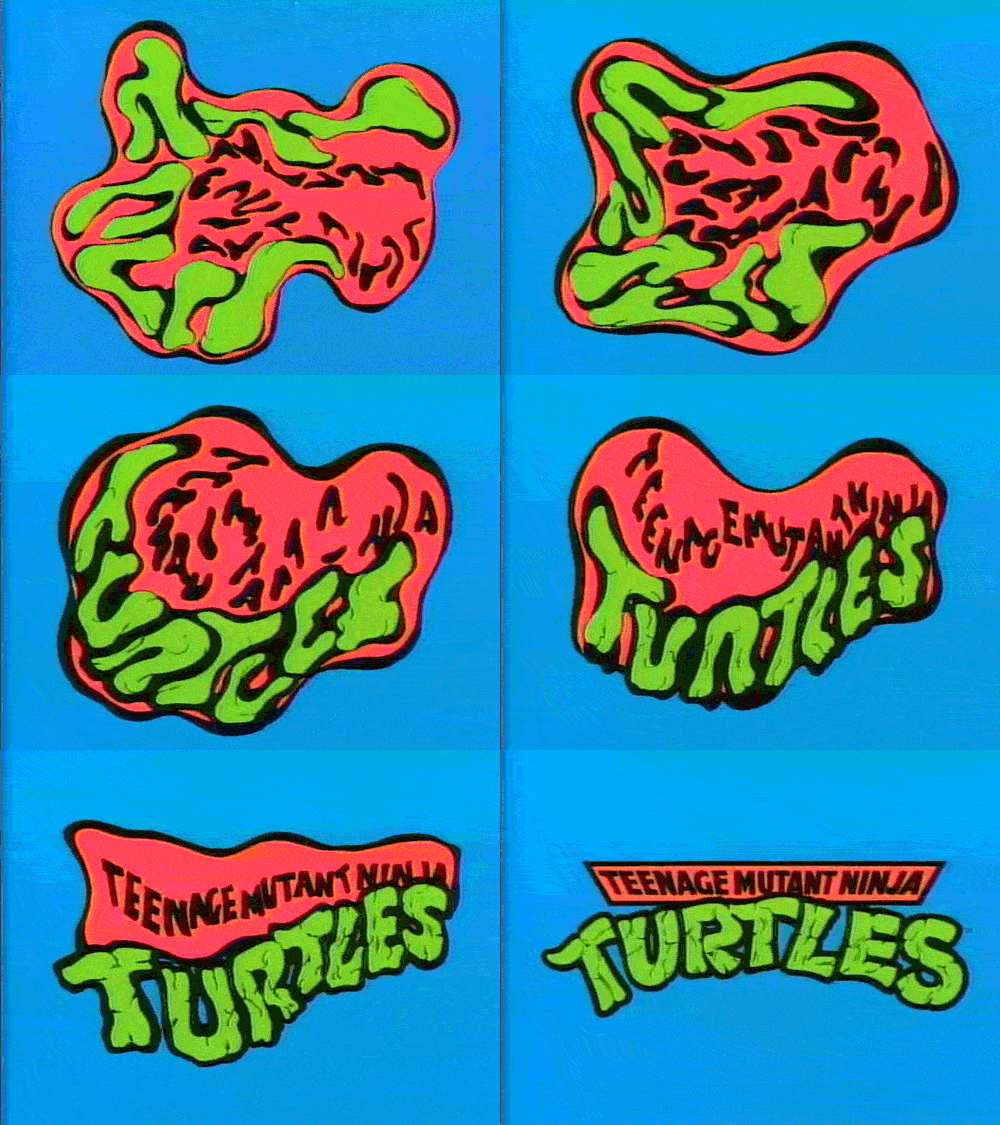
The 1987 Cartoon Series, Teenage Mutant Ninja Turtles
If you wish to start at the beginning, the only way to start earlier than this is to pick up an original comic book. This show is chock-full of eighties culture, wacky clean humor, and classic cheap 80/90s animation (if you've ever seen Captain Planet or The Magic School Bus, you've got the idea).
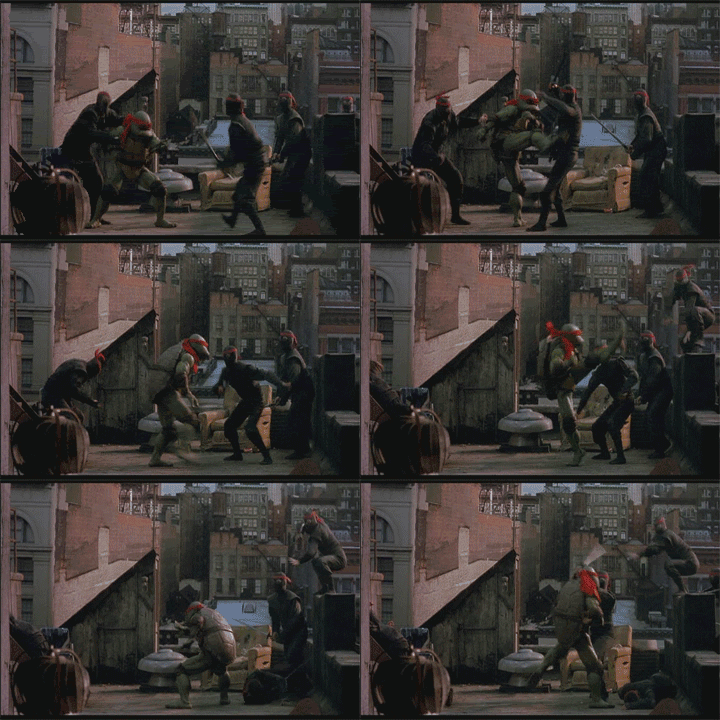
The 1990 Live Action Movie, Teenage Mutant Ninja Turtles
While this may not be the way to introduce your kids to the Turtles, this is the fan-favorite for introducing teens and adults to the series. It’s not only the fastest way to get introduced (since it's great as a standalone feature), but it’s also still considered by most to be the best of the movie adaptations. Most fans accept its origin story (beside that of the comic books) as the canon base for the franchise.
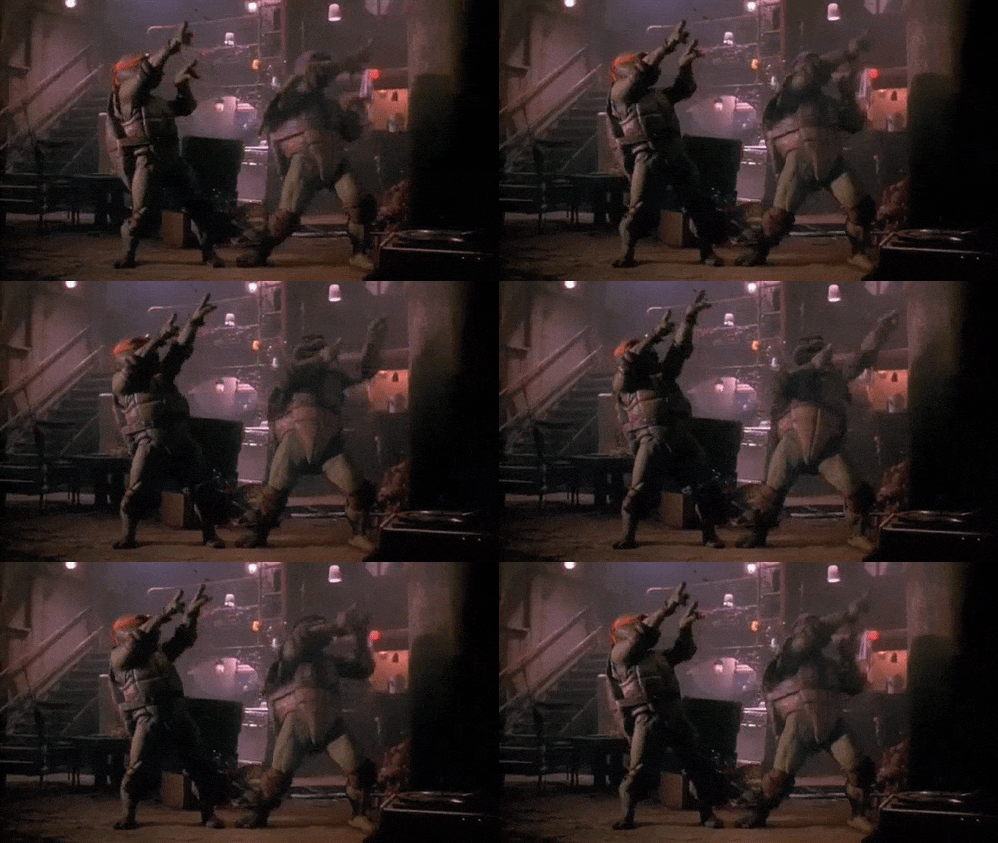
Part of the reason why it's so good is because it's got actual physical actors in costume, great humor, and live stunts!
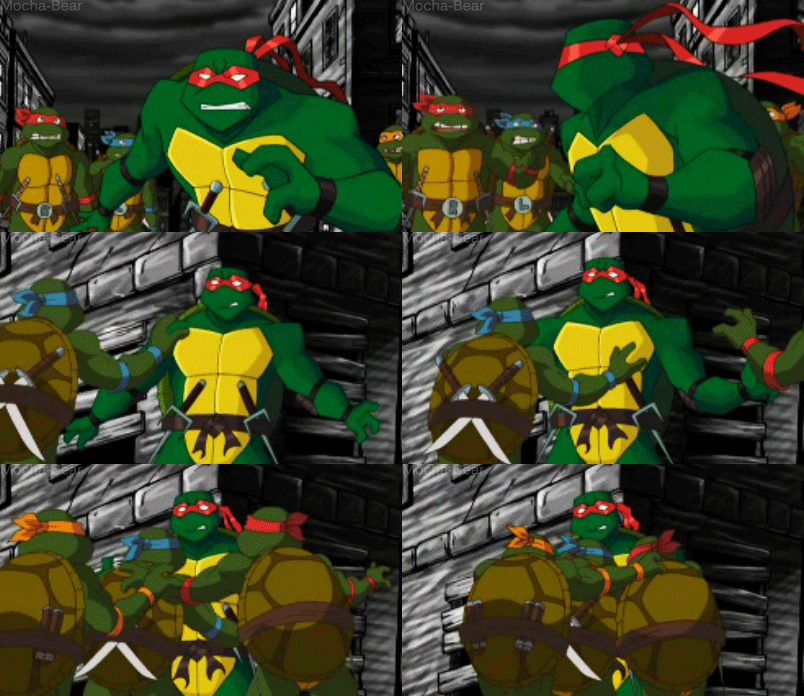
FOX’s 2003 Animated Series, Teenage Mutant Ninja Turtles
This animated series might appeal to more modern kids, but now that a new computer-animated series has been made by Nickelodeon, this saga is in a sad state of limbo between the classic original and the modern adaptation. Preteens and 90s kids might enjoy a bit more of the “serious” ninja action.

The 2009 Animated Film, Turtles Forever
While this movie starts a tad abruptly for newcomers, it’s definitely an homage to the series in a way that all fans can appreciate. It combines tongue-in-cheek writing with an incredible blend of animation styles, and it’s an instant classic that ought to sit in the library of any Ninja Turtle fan.
The 2012 Animated Series, Teenage Mutant Ninja Turtles
Complete with a catchy modern update of the beloved theme song, this version of the show is going strong and has a whole new generation of kids sporting Ninja Turtle regalia (every time I see kindergarteners running around with turtle shells on the backs of their hoodies, I always catch my breath and resist the urge to squeal). Featuring the harmless humor and ridiculous let’s-add-aliens-and-robots-because-who-cares plot twists that came from the original animated show, this series is bright and colorful and good for a laugh. It may have altered a few plot points like April O’Neil’s age and occupation, but it was made for kids: what do you expect?

The 2014 Live-Action Movie, Ninja Turtles
Watch under no circumstances, especially if you're new to the franchise. The design may be pretty good, but the script is abhorrent, and it does the already-ridiculous origin story a massive disservice. Now that is saying something.

And if you’re still on the fence, just give it time. There are plenty of trailers for the different sagas that you can find on Youtube that might interest you if you’re more of a visual person (like myself). Not only is there a trailer for the 1990 movie, but also a great mashup of the audio from Michael Bay’s trailer and the original animated series. Either way, it is the hope of turtle fans everywhere that you join our great clan, and buy a set of Ninja Turtle footie pajamas immediately.

Conclusion
In the end, I’d recommend that you ask the Ninja Turtle fans in your life where they think you should start. Each of them has a particular show or movie that first captured their heart, and whether you’re looking for comedy or adventure, they’ll be sure to steer you in the right direction. Teenage Mutant Ninja Turtles is a series that’s ridiculous… and no one cares because it’s just fun to watch.
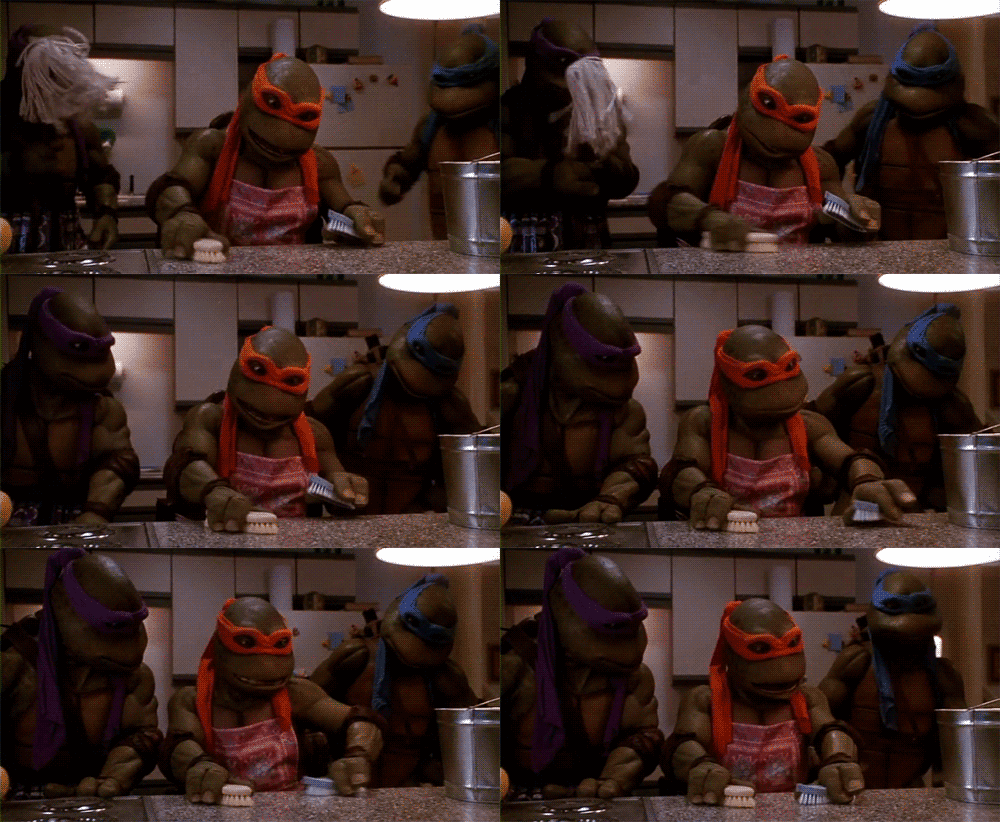 |
| "Wax on... wax off!" |
But, whatever you do… don’t watch the Michael Bay version first. Just don’t.























Follow Us
We can't wait to connect with you!